Wooden Book Shelf / Bookcase Organizer Display Furniture for Kids Rooms, Playroom, Nursery and Classroom, Nature
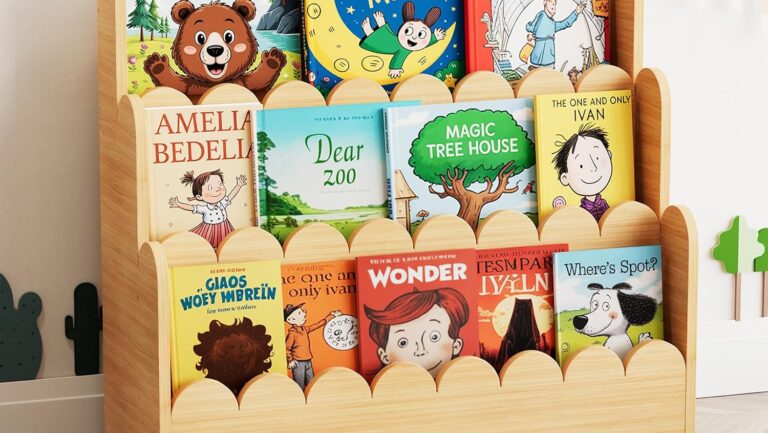
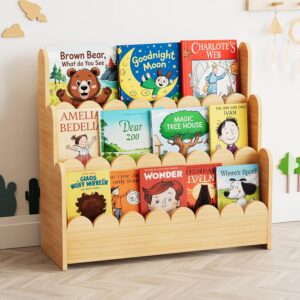
A Montessori bookshelf (or bookcase) is one of the simplest yet most impactful additions you can make to a child’s learning environment. Unlike a traditional bookshelf where books are stored spine-out in rows, a Montessori bookshelf displays books with their covers facing forward, making it easy for young children to see, choose, and return books independently. This seemingly small design difference has a big effect — when a child can see the cover of a book, they are far more likely to pick it up, engage with it, and develop a genuine love of reading from an early age.
The Montessori philosophy is built on the idea of the “prepared environment” — a space thoughtfully designed to invite a child’s independence and curiosity. A forward-facing bookshelf is a perfect expression of this principle. When books are displayed at a child’s eye level with covers visible, the child doesn’t need an adult to retrieve or suggest a book — they can make that choice entirely on their own. This small act of autonomy, repeated daily, builds confidence, decision-making skills, and a self-directed relationship with learning that goes well beyond reading.
Not all bookshelves marketed as “Montessori” are created equal. The best Montessori bookshelf is low enough for your child to reach without help, sturdy enough to withstand daily toddler use, and made from natural materials like solid wood rather than plastic. Many parents also look for models that include storage compartments below the display ledges — a practical touch that keeps the space tidy while teaching children to put things back where they belong. Whether you’re shopping for a ready-made option, planning an IKEA hack, or building one yourself, understanding what makes a bookshelf truly Montessori will help you make the right choice for your home and your child’s age.
This post is intended for general informational purposes only; please consult a qualified professional for advice specific to your child’s individual needs.