
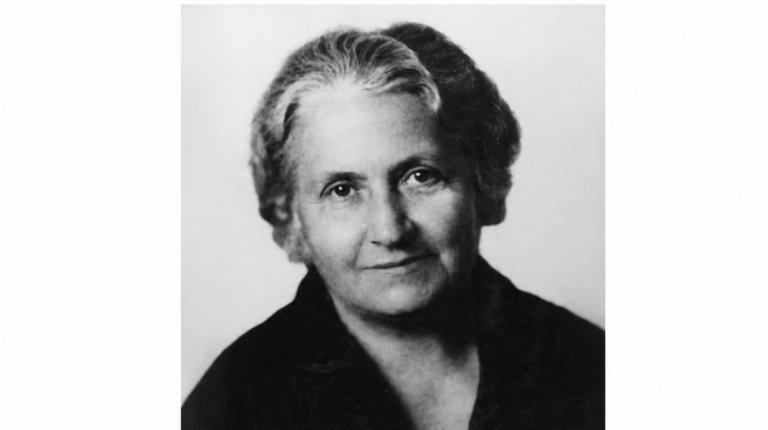
Dr. Maria Montessori (1870–1952)
Maria Montessori was an Italian physician, educator, and humanitarian – and one of the most influential figures in the history of education. She is best known as the founder of the Montessori method, an approach to education that has shaped the lives of millions of children around the world.
Key Dates in Maria Montessori’s Life
- 1870 – Born in Chiaravalle, Italy
- 1896 – Graduated from the University of Rome School of Medicine
- 1907 – Opened the first Casa dei Bambini in Rome
- 1909 – Published The Montessori Method
- 1929 – Founded the Association Montessori Internationale (AMI)
- 1949, 1950, 1951 – Nominated for the Nobel Peace Prize
- 1952 – Passed away in Noordwijk, the Netherlands
Early Life and Education
Maria Montessori was born on 31 August 1870 in Chiaravalle, a small town in the Marche region of Italy. From an early age, she showed exceptional intellectual ability and a determined, independent spirit. Her family eventually moved to Rome, where Maria attended technical school – an unusual choice for a girl at the time – before deciding she wished to study medicine.
Despite significant opposition from the male dominated academic establishment, Maria Montessori persisted. In 1896, she graduated from the University of Rome’s School of Medicine, becoming one of the first women in Italy to receive a medical degree. It was a landmark achievement that reflected the tenacity and courage that would define her entire life.
Working with Children – Early Observations
After graduating, Maria Montessori began working at a psychiatric clinic in Rome, where she encountered children with intellectual disabilities who were largely confined to bare rooms with little stimulation or educational support. She was struck by the potential she observed in these children and believed they were capable of far more than their circumstances allowed.
Drawing on the work of earlier educators – particularly Jean-Marc-Gaspard Itard and Édouard Séguin – Maria Montessori began developing specialised materials and methods to engage and educate these children. The results were remarkable. Children who had been written off as uneducable made genuine academic progress, prompting Montessori to ask a challenging question: if these methods worked for children with disabilities, what might they achieve with all children?
Casa dei Bambini – The Children’s House
In 1907, Maria Montessori was invited to set up an educational programme for young children in a poor district of Rome, in a housing project called San Lorenzo. The result was the first
Casa dei Bambini, or Children’s House – a revolutionary classroom environment designed around the needs and natural development of the child.
Maria Montessori furnished the classroom with child-sized furniture, real tools, and carefully designed materials. She gave the children freedom to choose their own activities and move freely within the prepared environment. What she observed astonished her: children as young as three years old concentrated deeply on their work, demonstrated great care for their materials, and showed a natural, spontaneous discipline quite unlike anything seen in traditional schoolrooms.
Word of the Casa dei Bambini spread rapidly. Educators, scholars, journalists, and public figures from across Europe and America came to observe. The Montessori method was born.
Global Influence and Publications
Maria Montessori’s first book,
Il Metodo della Pedagogia Scientifica (published in English as The Montessori Method), appeared in 1909 and was translated into more than twenty languages. It became an international bestseller and established Montessori as a leading voice in progressive education.
Over the following decades, she lectured extensively around the world, trained thousands of teachers, and wrote numerous influential works including
The Absorbent Mind, The Secret of Childhood, and The Discovery of the Child. She established teacher training centres across Europe and founded the Association Montessori Internationale (AMI) in 1929, which continues her work today.
Later Life and Legacy
During the Second World War, Maria Montessori was forced to leave Europe. She spent several years in India, where she continued training teachers and refined her thinking about the stages of child development. After the war, she returned to Europe and spent her final years in the Netherlands.
Maria Montessori was nominated for the Nobel Peace Prize three times – in 1949, 1950, and 1951 – in recognition of her contributions to peace through education. She passed away on 6 May 1952 in Noordwijk, the Netherlands, at the age of 81.
Her legacy is immeasurable. Today, there are estimated to be over 20,000 Montessori schools in more than 140 countries – serving children from infancy through to secondary school. Her conviction that education is the most powerful instrument for peace remains as relevant today as it was in 1907.
Maria Montessori Biographies
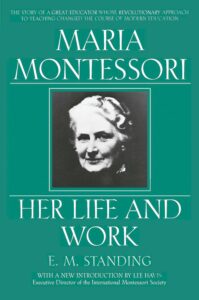
Maria Montessori: Her Life and Work
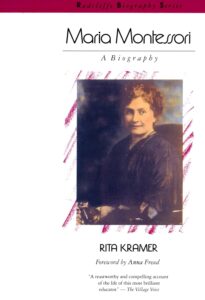
Maria Montessori: A Biography
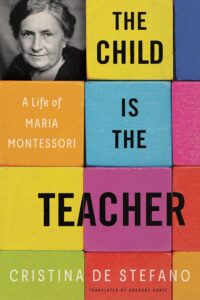
The Child Is the Teacher: A Life of Maria Montessori
This page is for general informational purposes only; please consult a qualified professional for advice specific to your child’s individual needs.