Essentials in a Montessori Home
Creating a Montessori-inspired home doesn’t require a complete renovation or a large budget. At its core, the Montessori home environment is about thoughtful design that supports your child’s independence, confidence, and natural drive to learn. The following are the key elements many Montessori families find most impactful.
1. The Prepared Environment
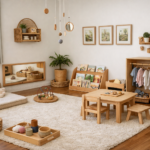
The concept of the prepared environment is central to Montessori philosophy. It simply means a space thoughtfully arranged to meet the child’s developmental needs — with everything accessible, orderly, and beautiful.
At home, a prepared environment typically includes:
- Low, open shelves that children can access independently
- A limited number of carefully chosen materials — typically 5–8 items on the shelf at any one time
- Natural materials and a calm, uncluttered aesthetic
- A safe space for movement
The goal is a space where a child can say “I can do this myself” — and mean it.
2. The Activity Shelf
A low shelf (such as an IKEA Kallax unit placed on its side) stocked with a small number of rotating activities is perhaps the most defining feature of a Montessori home. Each activity is stored on a tray or in a basket, with everything needed for that activity together.
Rotating activities every 1–2 weeks keeps the environment fresh and maintains your child’s interest. What goes back on the shelf after a rotation is often greeted with as much enthusiasm as something new.
3. Child-Height Access Throughout the Home
Independence is only possible if children can actually reach things. Consider:
- Low hooks in the hallway for coats and bags
- A step stool at the sink in the bathroom
- A low mirror in the bedroom
- Accessible clothing storage — a low rail or open drawer where children can choose and retrieve their own clothes
- A learning tower in the kitchen
4. The Floor Bed
A firm mattress on the floor — rather than a raised cot — allows children to move freely in and out of bed independently. This is a signature element of many Montessori-inspired bedrooms. For safety, the entire bedroom needs to be fully childproofed if a floor bed is used.
5. Practical Life Materials
Children learn best through real, meaningful activity. A selection of practical life materials — tools for cleaning, watering, cooking, and self-care — gives children genuine ways to participate in the life of the home:
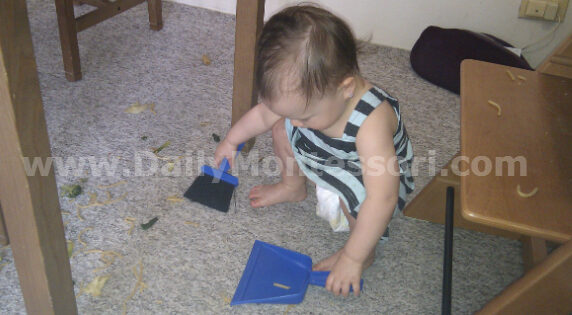
- A small dustpan and brush
- A child-sized watering can
- A cloth and spray bottle for cleaning surfaces
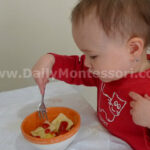
- Real utensils for food preparation
- A dressing frame for practising buttons, zips, and fastenings
6. Nature and Beauty
Montessori environments are characterised by beauty, order, and a connection to the natural world. Simple touches make a real difference:
- A nature table or tray where your child can display seasonal objects
- A plant that your child helps to water
- Real flowers in a small vase
- Natural materials throughout — wood, cotton, wool, wicker
- Artwork at the child’s eye level, chosen for beauty and interest
7. A Reading Corner
Books are central to language and literacy development. A dedicated book corner — a low ledge or basket displaying books face-out, with a comfortable place to sit and read — invites children to engage with books independently. Rotate the selection regularly and include both fiction and non-fiction.
8. Outdoor Access
Where possible, accessible outdoor space is a wonderful extension of the Montessori home environment. A small garden area where children can dig, water, and explore; a mud kitchen; a space to run and climb — all of these support gross motor development, nature connection, and sensory experience that cannot easily be replicated indoors.
Getting Started
If you’re setting up a Montessori home for the first time, the most helpful advice is simply to start small and observe. Choose one room or one area, make one or two changes, and watch how your child responds. Let their interests and engagement guide you from there.
This post is for general informational purposes only; please consult a qualified professional for advice specific to your child’s needs.