Montessori Baby Mobiles
Mobiles are among the first Montessori materials introduced to a baby — as early as the first week of life. Unlike the busy, multi-coloured mobiles common in many nurseries, Montessori mobiles are carefully designed to match the specific visual development of a young baby at each stage.
The Classic Sequence
Montessori typically presents mobiles in a developmental sequence:
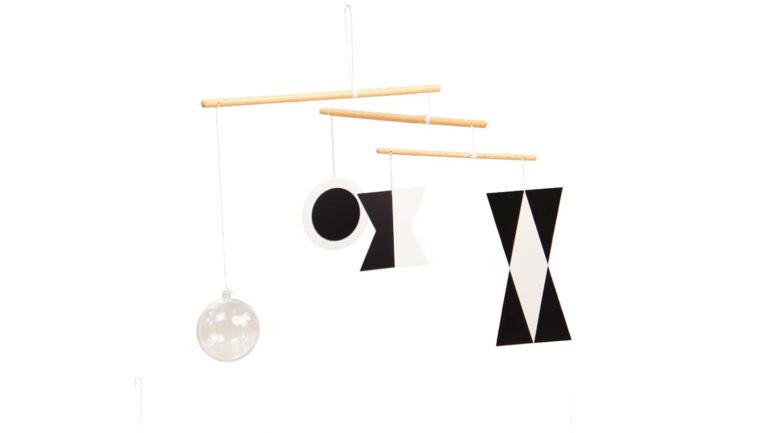
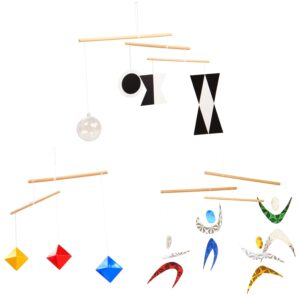
- Munari Mobile — introduced in the first weeks of life. Black and white geometric shapes on a wooden frame support early visual tracking.
- Octahedron Mobile — three reflective geometric shapes in primary colours, introduced from around 3–4 weeks as the baby begins to perceive colour.
- Gobbi Mobile — five spheres in graduated shades of a single colour, introducing subtle colour gradation and depth perception from around 5–6 weeks.
- Dancers Mobile — lightweight dancing figures that respond to air movement, stimulating tracking and attention from around 6–8 weeks.
How to Use Them
Hang the mobile above the baby’s movement mat or cot at an appropriate distance for their current stage of visual development — typically around 30 cm from the face in the very early weeks. Observe what your baby focuses on and responds to, and change the mobile as their interest shifts.
Mobiles should be removed once a baby is able to bat at or reach them, to prevent any entanglement risk.
This post is intended for general informational purposes only; please consult a qualified professional for advice specific to your child’s individual needs.