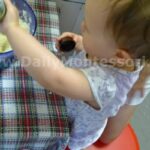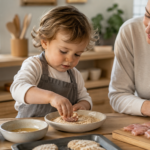
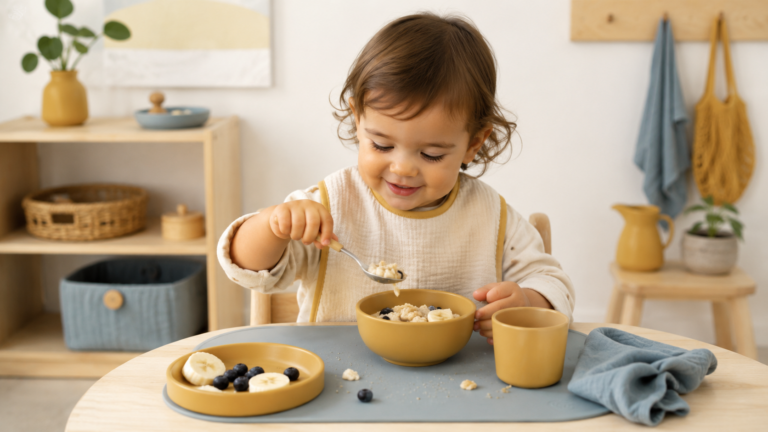
Learning to feed themselves is a purposeful and genuinely important skill for young children. It is often the case that we hold back from allowing children to feed themselves — worried about mess, or unsure they are ready. The Montessori approach encourages us to trust the child’s drive for independence, and to set up the environment so that self-feeding becomes achievable and enjoyable.
Preparing the Environment
- Use a mess mat or small rug under the child’s eating area. Accepting that some mess is part of learning makes the whole experience less stressful for everyone.
- Choose a seat where the child feels stable — ideally one where their feet can touch the floor or a footrest. Physical stability supports confidence and coordination.
- Use child-sized utensils — a small spoon and fork sized for little hands. Real metal ones are preferred over plastic where possible, as they have a more satisfying weight and feel.
- Involve the child in family mealtimes and allow them to observe how adults eat. Children are natural imitators, and seeing utensils used purposefully is one of the best ways they learn.
Getting Started
- Begin with foods that are easy to scoop or spear — soft cooked vegetables, mashed potato, pieces of soft fruit.
- Demonstrate slowly how to hold and use the spoon, then hand it over and let the child try.
- Resist the urge to step in and help unless genuinely necessary — practice, even messy practice, is how the skill develops.
- Keep mealtimes calm and positive. A relaxed atmosphere supports both eating and learning.
Independence with eating builds gradually. Some children take to it quickly; others need more time and encouragement. Following the child’s lead and maintaining a calm, patient approach tends to be most effective.
This post is intended for general informational purposes only; please consult a qualified professional for advice specific to your child’s individual needs.