How to Teach Young Children to Eat Independently
Fostering independence at mealtimes is one of the most rewarding — and sometimes messy — aspects of the Montessori approach to early childhood. The goal is not speed or tidiness: it is the gradual, joyful development of real self-feeding skills that give a child genuine autonomy over one of their most basic daily needs.
The Montessori Approach to Mealtime Independence
In Montessori, mealtimes are treated as practical life activities — real, meaningful participation in a fundamental aspect of daily living. Children are involved at every stage: from setting the table, to self-serving where appropriate, to eating independently, to clearing their own place. The environment is set up to make this possible: child-sized furniture, accessible utensils, real plates and cups.
Starting Points by Age
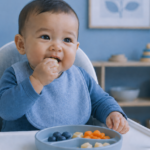
6–12 Months: Finger Foods and Exploration
Self-feeding begins with finger foods — soft pieces of fruit, cooked vegetable, or bread that a baby can pick up and explore. This is the foundation of mealtime independence, even before spoons are relevant. Expect food to be squeezed, dropped, and played with: this sensory exploration is developmentally purposeful.
12–18 Months: The First Spoon
Offer a small, lightweight spoon alongside finger foods. A pre-loaded spoon placed on the tray can help a child understand what a spoon is for, before they have the coordination to load it themselves. Expect much of the food to miss its target initially — this is normal and improves with practice and patience.
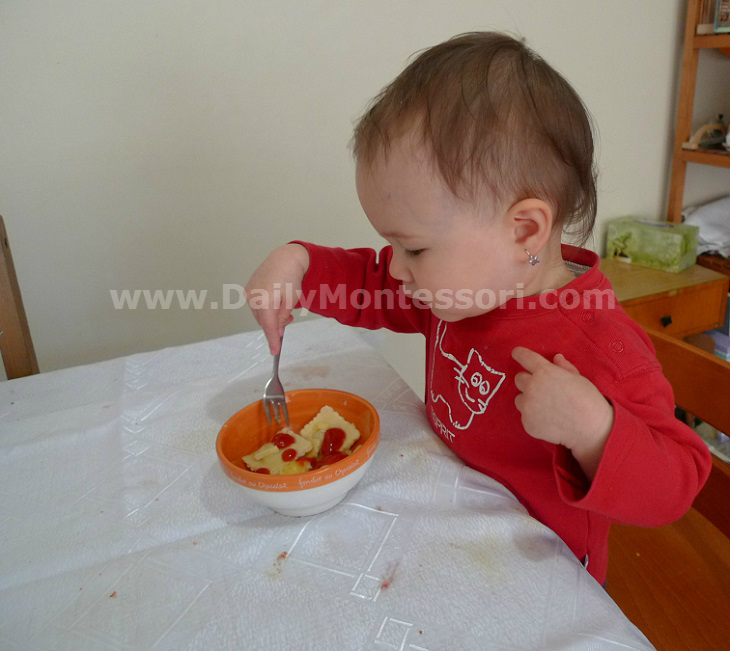
18 Months–2 Years: Growing Competence
By 18 months, many children can use a spoon with reasonable success for soft foods. Introduce a small fork for appropriately sized, soft pieces. Continue offering finger foods alongside utensils — not everything needs to be eaten with cutlery.
2–3 Years: Real Participation
Children at this stage can typically manage both spoon and fork well. Introduce a child-safe spreading knife (for butter, hummus, etc.) and, with supervision, begin introducing cutting soft foods. Involve your child in serving themselves from a shared bowl where practical.
Setting Up the Environment for Success
- Use a child-sized, stable chair with foot support — good posture helps
- Offer real, appropriately sized utensils — not plastic toys
- Use a small, stable plate that doesn’t slide easily
- Accept mess without drama — a mat under the chair simplifies clean-up
- Offer small portions that can be refilled, rather than overwhelming amounts
What Supports a Positive Relationship with Food
Beyond the practical skills of self-feeding, the mealtime environment shapes a child’s relationship with food. Keeping mealtimes relaxed and pleasant, avoiding pressure around what or how much is eaten, and eating together as a family where possible are among the most powerful things parents can do to support a healthy, positive relationship with food in the long term.
This post is for general informational purposes only; please consult a qualified professional for advice specific to your child’s needs.