Sleep is one of the areas of early parenting that generates the most questions, concern, and conflicting advice. The Montessori approach offers a thoughtful framework — not a prescriptive set of rules — grounded in respect for the child’s needs and the creation of an environment that supports restful, independent sleep over time.
The Sleep Environment
The Floor Bed
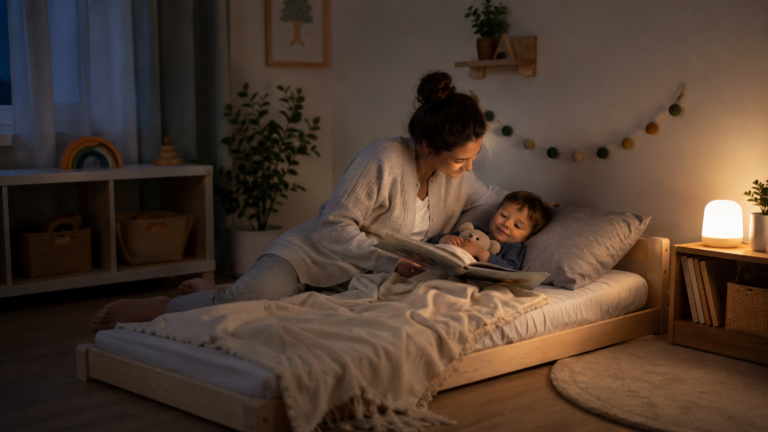
Many Montessori families choose a floor bed — a firm mattress placed directly on the floor — for their young children. The key benefit is independence: a child who can get in and out of bed independently develops genuine autonomy over their own rest and waking. For this to work safely, the entire room needs to be fully childproofed.
A Calm, Ordered Room
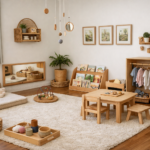
A simple, ordered bedroom — without overstimulating toys or screens — tends to support a calmer transition to sleep. Good light control (curtains or blackout blinds) and a comfortable temperature matter too.
Natural Bedding
Natural, breathable bedding materials — cotton, wool, or bamboo — tend to be more comfortable and temperature-regulating than synthetic alternatives. Always follow current safe sleep guidelines for your child’s age, particularly around loose bedding for infants.
The Bedtime Routine
Predictable, calming bedtime routines are one of the most well-supported strategies in sleep research, and align closely with Montessori’s emphasis on order and predictability. A routine doesn’t need to be long — 20 to 30 minutes is typically sufficient — but consistency matters.
A simple, effective routine might include:
- A bath or wash (optional, but often helpful for winding down)
- Changing into pyjamas — involving the child as much as possible
- Brushing teeth
- Reading together — 1–3 books, chosen by the child where possible
- Quiet conversation or a simple wind-down song
- Saying goodnight and settling the child in their bed
Involving Children in Their Routine
From a Montessori perspective, children are active participants in their own routines. Involving your child in choosing their pyjamas, selecting the bedtime books, and following the steps of the routine helps build cooperation rather than resistance. Visual routine charts — simple pictures showing each step — can be helpful for toddlers and preschoolers who like to know what comes next.
Supporting Independent Sleep Over Time
Gradual, respectful approaches to building independent sleep tend to be more sustainable than abrupt sleep training. Things that tend to help over time include:
- Consistent routines that reliably signal the approach of sleep
- A predictable sleep environment the child associates with rest
- Gradually reducing adult presence at sleep onset at a pace that feels manageable
- A floor bed, which allows the child autonomy over their own body during the night
When to Seek Support
If sleep challenges are significantly affecting your child’s or family’s wellbeing, please speak with your health visitor or paediatrician. Sleep difficulties are very common and support is available.
This post is for general informational purposes only; please consult a qualified professional for advice specific to your child’s needs.
Ads