
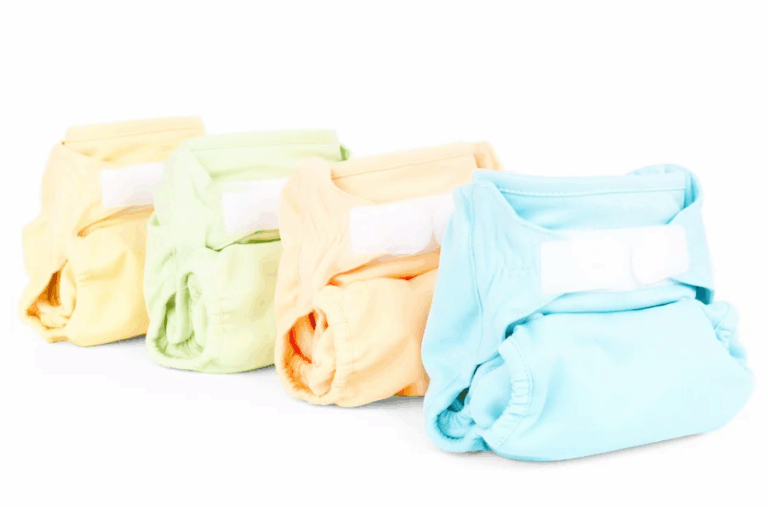
Cloth or Disposable Nappies / Diapers: Considerations for Families
The choice between cloth and disposable nappies is one that many families think carefully about — for reasons of practicality, cost, environmental impact, and sometimes developmental considerations. There is no universally “right” answer, and the best choice depends on your individual circumstances, values, and capacity.
Environmental Considerations
Disposable nappies generate significant waste — estimates suggest a child uses somewhere between 4,000 and 6,000 disposable nappies before being toilet-trained, most of which go to landfill. Modern disposables have improved in materials and biodegradability, but they remain a notable source of household waste.
Cloth nappies, when used over time and for multiple children, can have a lower overall environmental impact — though they do require washing, and the energy and water used in laundering is worth factoring in.
Practical Considerations
Both options have practical advantages and challenges:
- Disposables are convenient, widely available, highly absorbent, and require minimal preparation
- Cloth nappies have a higher upfront cost but lower ongoing cost, and come in a wide variety of modern, easy-to-use designs — many of which are far simpler than the terry squares of previous generations
A Montessori Perspective
Some Montessori-influenced practitioners suggest that cloth nappies, by allowing babies to feel wetness more readily, may support earlier awareness of the sensation of urination — which could potentially support the toilet learning process. However, evidence on this is limited, and it is not a decisive factor for most families.
More broadly, the Montessori approach to nappy changes emphasises involving the child in the process — narrating what is happening, asking the child to assist by lifting hips or pushing through sleeves, and treating the change as a collaborative and respectful interaction rather than something done to the child.
Finding What Works for Your Family
Many families use a combination — cloth at home when practical, disposables when travelling or at childcare. Trying a small selection of different cloth nappy types before committing to a full set is generally advisable. Local nappy libraries often allow families to trial different styles before purchasing.
This post is for general informational purposes only; please consult a qualified professional for advice specific to your child’s needs.


I have been using cloth nappies for the first 5 months, but then i went on disposable for few reasons first it is hard to use them on baby that is jumping, turning around and crowing; secondly it is hart to cope with wishing them. I find them weist of money (because the good ones aren’t any cheaper) and waist of time and effort. Better save your time and energy for games and have enjoyable motherhood. Happy mum = happy child!
My nephew is a down syndrome child who is 2 years & 8 months. He is yet to walk though able to hold on to a rest of a chair and stand up. He gets on to the toy car and move about inside the house. At home there are 2 kids of 8+ & 11+, his mother, father & grandmother but he doesn’t talk. The only words he can say is brother and mother. How should I encourage him to speak and talk?
I have cloth nappies and used them from 7 weeks to15 months with the odd gap in between with disposables. I stopped using washables and felt very guilty, only because I have a medical condition and I get very tired, I just felt i could not cope with everything and with no family I ended up buying natural disposables. I totally agree that they are better and babies potty train quicker, being a montessori teacher myself and a nanny I think they are great. I think i may start using them a little more with disposables.
I agree with the theory behind using cloth nappies and wish I used them more than the disposable type. Unfortunately, as a very busy mom I didn’t have the time to keep changing diapers as often and especially cleaning them. The few occasions that I did use cloth, I used the liner with it and it worked really well.