
Montessori Sensitive Periods: What They Are and How to Support Them at Home
One of the most fascinating and practically useful aspects of Montessori theory is the concept of sensitive periods — windows of heightened receptivity during which children are particularly driven to develop specific skills or explore particular aspects of their world. Understanding these periods can help parents respond more effectively and supportively to their child’s behaviour and interests.
What Is a Sensitive Period?
Maria Montessori borrowed the term “sensitive period” from the biologist Hugo de Vries, who used it to describe windows of optimal development in animals. Montessori observed similar windows in human children — phases during which a child appears almost compelled to focus on a particular aspect of their environment or development.
During a sensitive period, learning in that area tends to happen with remarkable ease, deep engagement, and often great joy. Once the window has passed, the same learning is still possible — but typically requires more effort and conscious instruction.
The Main Sensitive Periods in Early Childhood
Language (Birth to Approximately 6 Years)
The longest and most significant sensitive period. Children absorb language — including multiple languages — effortlessly during this window. Supporting it: talk, read, sing, and have real conversations with your child throughout the day.
Order (Approximately 18 Months to 3 Years)
Children in this period show a powerful need for consistency and predictability in their environment. Reactions to things being “out of place” that seem disproportionate to adults often make perfect developmental sense. Supporting it: maintain predictable routines, create an orderly environment, and give advance notice of changes.
Sensory Refinement (Birth to Approximately 5 Years)
Children are naturally driven to refine and organise their sensory experiences. Supporting it: provide rich sensory experiences through natural materials, outdoor play, music, cooking, and art.
Movement (Birth to Approximately 4 Years)
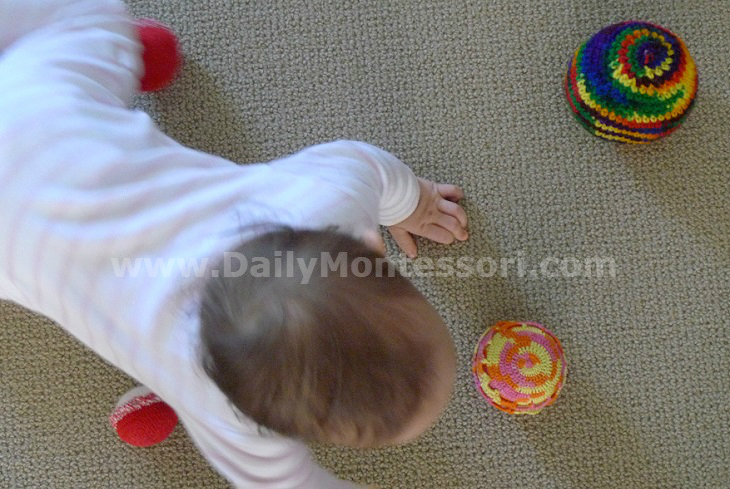
Children are driven to develop and refine physical movement — both gross and fine motor. Supporting it: allow freedom of movement, provide practical life activities, and ensure ample outdoor play.
Small Objects (Approximately 18 Months to 3 Years)
Toddlers become fascinated with very small objects and intricate details. Supporting it: provide safe small objects for sorting, counting, and manipulation — always with appropriate supervision for choking hazards.
Social Development (Approximately 2.5 to 6 Years)
Children become increasingly interested in peers, social interaction, and the customs and courtesies of social life. Supporting it: model respectful interaction, introduce grace and courtesy, and provide opportunities for social play.
Recognising a Sensitive Period in Your Child
Signs that your child may be in a sensitive period include: intense, repeated focus on a particular activity; strong emotional reactions when a related need is frustrated; and what might appear to be an obsessive interest in a particular aspect of their environment.
Responding with understanding rather than frustration — and finding safe ways to support the underlying drive — tends to be more effective than simply redirecting the behaviour.
This post is for general informational purposes only; please consult a qualified professional for advice specific to your child’s needs.

montessori is the best.i love montessori
montessori is the best.to mentor every one
Thanks a lot for the information
Dr maria montessory thank you soon much for this method . previously I have not treated my children well but I just finished reading this material and very enlightened now. God bless MONTESSORY
love Montessori Method..
hi i am slightly confused over the mentioned sensitive periods…. as i am only reading this up online….
Order over here is stated between 18 m to 2 y and in another source it is between 2 y to 4 y like wise there is no mention of sensitive period of music…. can you help with elaborating all possible sensitive periods….
– Renee, India
Montessori system is great, I am working with the youngest 12month to 21 month,I love method Montessori.
Thanks a lot.. really worth..
Montessori system is great.I am working with the youngest (2.5-3.5 years) and i believe that i am going through the most beautiful phase of my life.
write now m learning this education and m finding it really interesting ..
Great Info. My students here at University of Education (Lahore, Pakistan) have learned a lot about Montessori ideas & their applications in real life from your interesting & informative blog. Especially my male students are amazed to learn. -:)
Hey Kristy, my son did the same! now he is 28 months and still hasn’t returned to the potty/toilet. i guess they go back to it in time…i do the same as you: talking to him about toileting and asking if he needs to go, to run to the toilet or potty. and if i need to go i tell him, and verbalise that i have to go to the toilet to do it (hoping that will catch on, that if you have to go, you go to that place!). also, must say if he takes off his trainer pants and runs around naked, he’ll now utter “mama†just before he wees on the floor! i say to him then, oh, next time we’ll go to the potty! let’s get a cloth and wipe this up!
hope i’m doing the right thing! 🙂
is anything said about a sensitive period for toilet training? My 21 month old began telling me about ‘poo poo’ at 17 months and was very interested in the whole toilet process including sitting on it. We gave him plenty of positive reinforcement and everything was going really well, then one day at around 20 months he just refused to use the toilet and won’t use it since. I keep asking if he wants to use the toilet but have not forced the issue.
I found this site very interesting, I presently study to become a assistant guide. This site is wonderful. Montessori method is from far the best way to respond to the needs that our children have. Knowing what is a child in is integral aspect, would really help to understand them and help them to become…leaders of tomorrow!
I run a montessori ‘First Steps’ in dubai since last year, its amazing to see the positive effects of montessori education on overall development of children, i regret i didn’t know about it when my own children needed it. I Love Montessori Method
My son was planning to marry & I decided to study Montessori in readiness for the grandchildren. I’m just loving it & wished I had used it on my kids. Thank You
I love, love, love your whole site. My daughter-in-law works and is studying Montessori and I type her assignments.
It’s midnight in Australia and I just can’t stop reading all this. So great. Thank you