
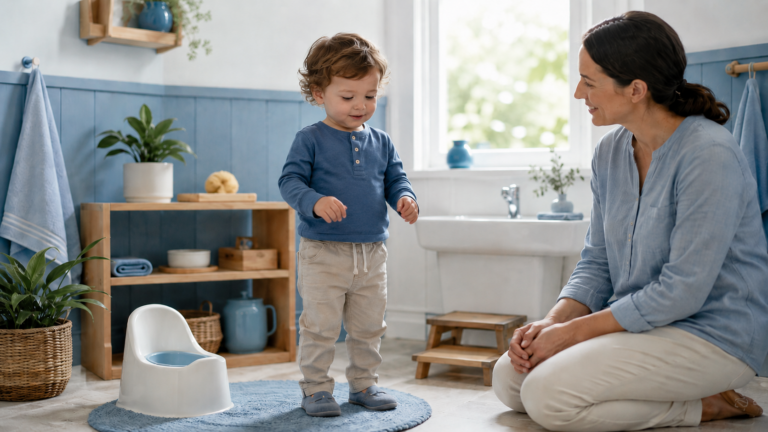
Toilet learning — the preferred Montessori term for what is often called “toilet training” — is approached very differently in Montessori than in many mainstream parenting frameworks. The shift in language is intentional: training implies an adult-led process focused on achieving a result; learning reflects an approach where the child is an active, willing participant, and developmental readiness is the guiding factor.
The Montessori Philosophy
In Montessori, toilet learning is understood as a natural developmental milestone — not a behaviour to be shaped through rewards and punishments, nor a competition to be won as early as possible. The goal is a process that:
- Preserves the child’s dignity throughout
- Follows the child’s individual readiness rather than a calendar timeline
- Builds genuine awareness and self-regulation, rather than compliance
- Involves the child as an active participant in their own self-care
Readiness: What to Look For
Physical Readiness
- Ability to stay dry for stretches of at least 1–2 hours
- Awareness of being wet or soiled — pulling at the nappy, seeking privacy for a bowel movement
- Ability to pull pants up and down independently (or nearly so)
Cognitive and Language Readiness
- Ability to follow simple two-step instructions
- Some language to communicate needs, or consistent signs for toilet-related communication
- Interest in what others do in the bathroom
Setting Up a Supportive Environment
- A child-sized potty on the bathroom floor from early on — familiarity without pressure
- Easy-to-remove clothing — elasticated waistbands, no fiddly fastenings during the learning period
- A step stool at the toilet and sink for independent access
- Hand soap and towel at child height — handwashing becomes part of the sequence from the start
Language and Approach
- Use matter-of-fact, anatomically correct language — recommended by many child health professionals
- Respond to accidents calmly: “That was a wee. Let’s get some dry clothes. Next time we’ll try the potty.”
- Avoid shame, frustration, or making the child feel they have failed
- Celebrate genuine successes warmly — without creating pressure to perform for adult approval
Night-Time Dryness
Night-time dryness is a separate developmental milestone from daytime dryness, governed in part by physiological maturity that cannot be directly trained. It typically follows daytime dryness by months or sometimes years, and wide variation in timing is entirely normal.
When to Seek Guidance
If your child is past age four and not yet showing consistent daytime toilet use, or if you have concerns about regression or emotional distress around toileting, your child’s paediatrician or a continence specialist can offer personalised advice and support.
This post is for general informational purposes only; please consult a qualified professional for advice specific to your child’s needs.