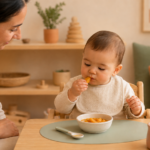
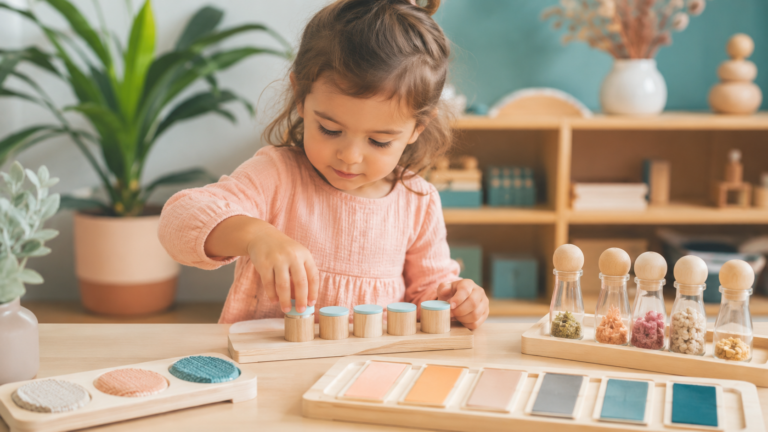
During this sensitive period, young children show a strong fascination with sensorial experiences — taste, smell, sound, touch, temperature, and weight. This intense interest in sensation drives the child to observe, compare, and make increasingly refined discriminations about the world around them.
The Montessori phrase often associated with this period is: “Nothing is in the mind that was not first in the senses.” This reflects the view that sensory experience forms the foundation for all later learning.
To support this at home, you might offer opportunities such as:
- Exploring different herbs, flowers, or spices by smell
- Handling objects of different textures and temperatures
- Listening for different sounds outdoors and indoors
- Tasting a variety of foods with distinct flavours and textures
Sensitive Period for Small Objects (Approximately 1 to 3 Years)
Closely related is the sensitive period for small objects and tiny details. Children during this phase may become absorbed in examining very small things — a tiny stone, an insect, the details on a leaf. This is a healthy sign that order and fine discrimination are developing in the child’s thinking.
To support this period safely, get down to your child’s level and look at their environment from their perspective — you may be surprised by the rich detail they are noticing. Ensure that any small objects in the environment are safe and developmentally appropriate.
Other Montessori Sensitive Periods
- Sensitive Period for Order (approximately 18 months to 2 years)
- Sensitive Period for Language (birth to 6 years)
This post is intended for general informational purposes only; please consult a qualified professional for advice specific to your child’s individual needs.